Tensile strength to failure
Horizontal test on a 100-ft bed rated to 1.3 million lb. A 300 lb traditional mushroom and a 300 lb MoorSafe prototype loaded to failure.
38,560
Traditional · stem fracture
40,657
MoorSafe · +5%
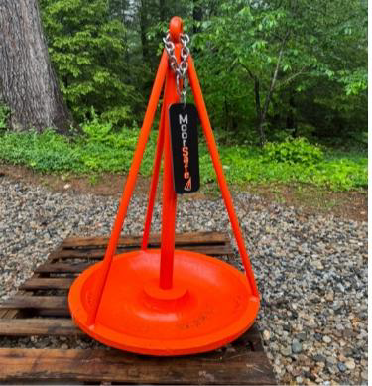
We didn't reinvent the mushroom anchor — we removed its flaw. Three symmetrically positioned bars turn the stem into a cone that significantly reduces the risk of chain wrap. It still beds into mud, still gains suction, still holds.
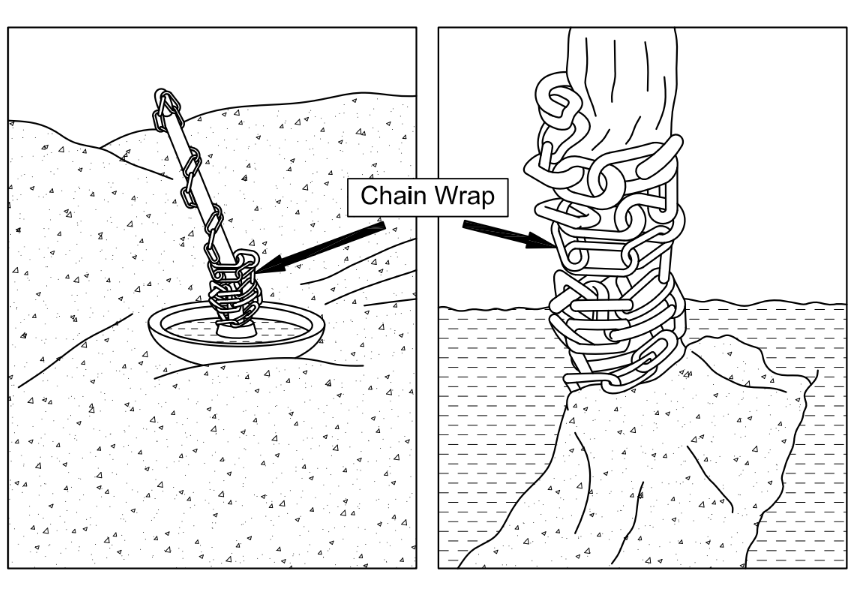
The bowl sinks into mud and gains suction over time — but its vertical stem is the weakness. As tides, currents, and wind swing the boat, the chain rotates around the stem. Once it catches, every cycle pulls it tighter. What is chain wrap?
The bars rise from the bowl to a single point above the stem. The result is a cone — and a cone has nowhere for chain to catch.
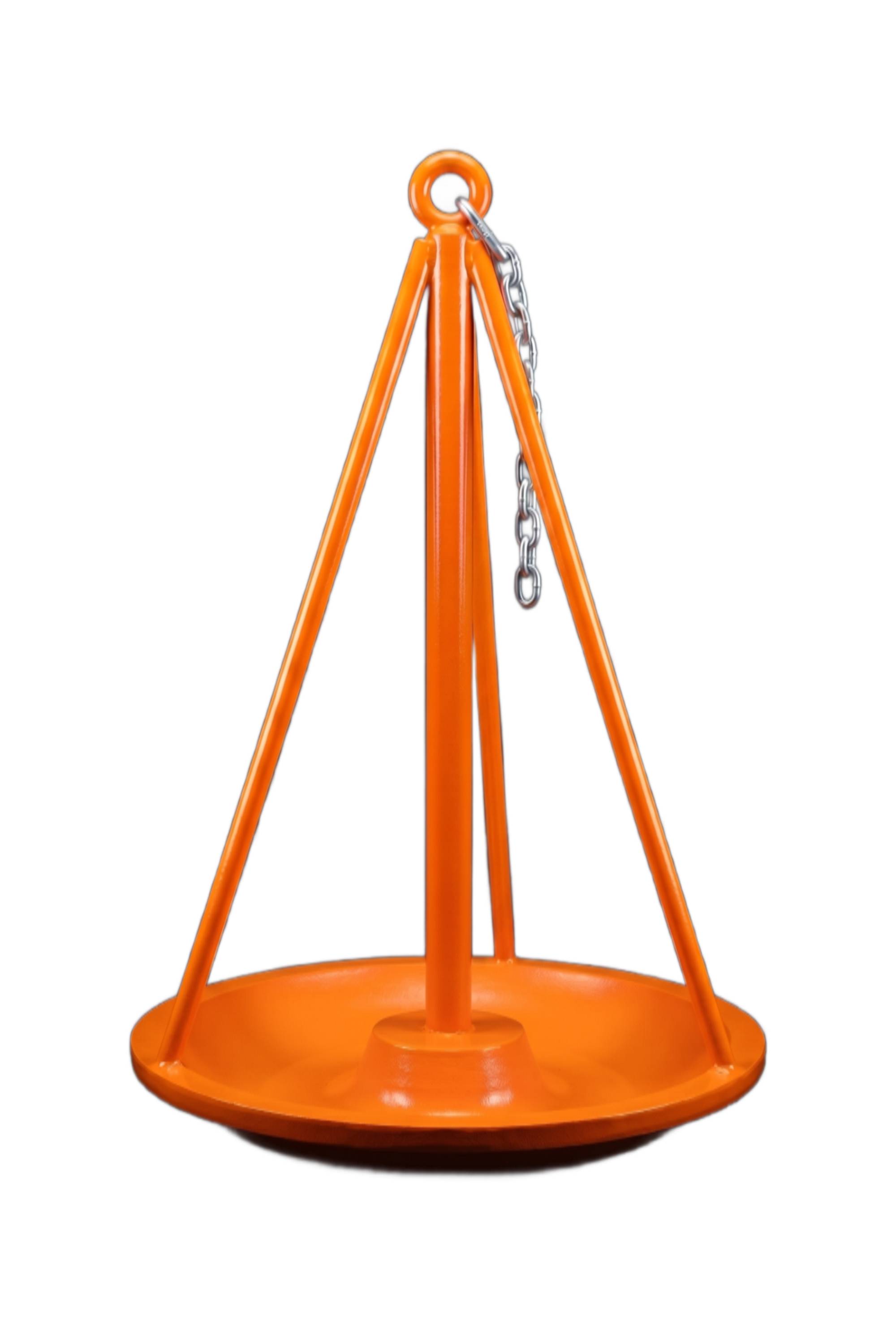
Same concave mushroom bowl. It sinks into mud and gains suction over weeks — holding power isn't compromised.
Three symmetrical bars meet above the stem. As tides and currents shift, the chain has nothing to catch on, so it slides off.
40,657 lb tensile strength versus 38,560 lb for the traditional mushroom — a stronger anchor, not a tradeoff.
Same chain, shackles, scope, and setting practice. Any mooring service provider will know exactly what to do.
We didn't run tests on our own bench. Tensile at Yale Cordage in Saco; 28 days on the seabed in Casco Bay.
Horizontal test on a 100-ft bed rated to 1.3 million lb. A 300 lb traditional mushroom and a 300 lb MoorSafe prototype loaded to failure.
Both anchors set on the same muddy seabed for 28 days, then pulled by a lobster boat at 3:1 scope with a 4,000 lb digital load indicator.
Comparable breakout with deeper burial — holding keeps improving as sediment consolidates above the anchor.
One design for boats of about 30 to 40 ft, or for heavier displacement and moderate exposure. It installs with the chain, shackles, and scope you already have.
Pricing is by quote. It excludes chain, hardware, and installation, and shipping is quoted by destination. Looking for a larger size? Send us a request and tell us about your mooring.
Download the info packet (PDF) →Any mooring service provider will be familiar with the process. We can recommend providers in your area.
Ask about an installerThe 400 lb suits boats of about 30 to 40 ft, or heavier displacement and moderate exposure. We confirm it for your mooring before you order.
Same chain, shackles, swivel, and pennant you use today. Attach at the top eye.
Lower with a mooring barge or service boat, at the same scope and with the same practice as a mushroom.
Holding grows as the bowl embeds. Inspect on your normal schedule, as you would any mooring.
Read the answers harbormasters ask most, or write to us. A real person replies within one business day.